

SEO Analysis
SiteScore inspects the on-page SEO elements that search engines use to understand and rank a page — titles, meta descriptions, canonical tags, heading structure, internal and external links, and image attributes.
What this feature checks
8 checks in this category. Every check links to the source markup it inspects.
Title tag
Presence, length, and uniqueness within the document.
Meta description
Presence, length, and relevance to the page.
Canonical URL
Whether a canonical link is specified and well-formed.
Heading hierarchy
Single H1, logical H2–H6 nesting, no skipped levels.
Internal & external links
Count, follow state, and anchor text visibility.
Image alt text
Missing, empty, or non-descriptive alt attributes.
Open Graph & Twitter tags
Social sharing metadata for link previews.
URL structure
Length, readability, and use of query parameters.
How SiteScore inspects seo analysis
A straightforward look at what happens when you run this analysis.
- 1
SiteScore parses the live DOM in your browser to read the document’s head and body elements.
- 2
Each signal is compared against documented best practices and shown with the exact source markup.
- 3
An evidence panel lets you inspect the underlying tag, attribute, or text behind every finding.
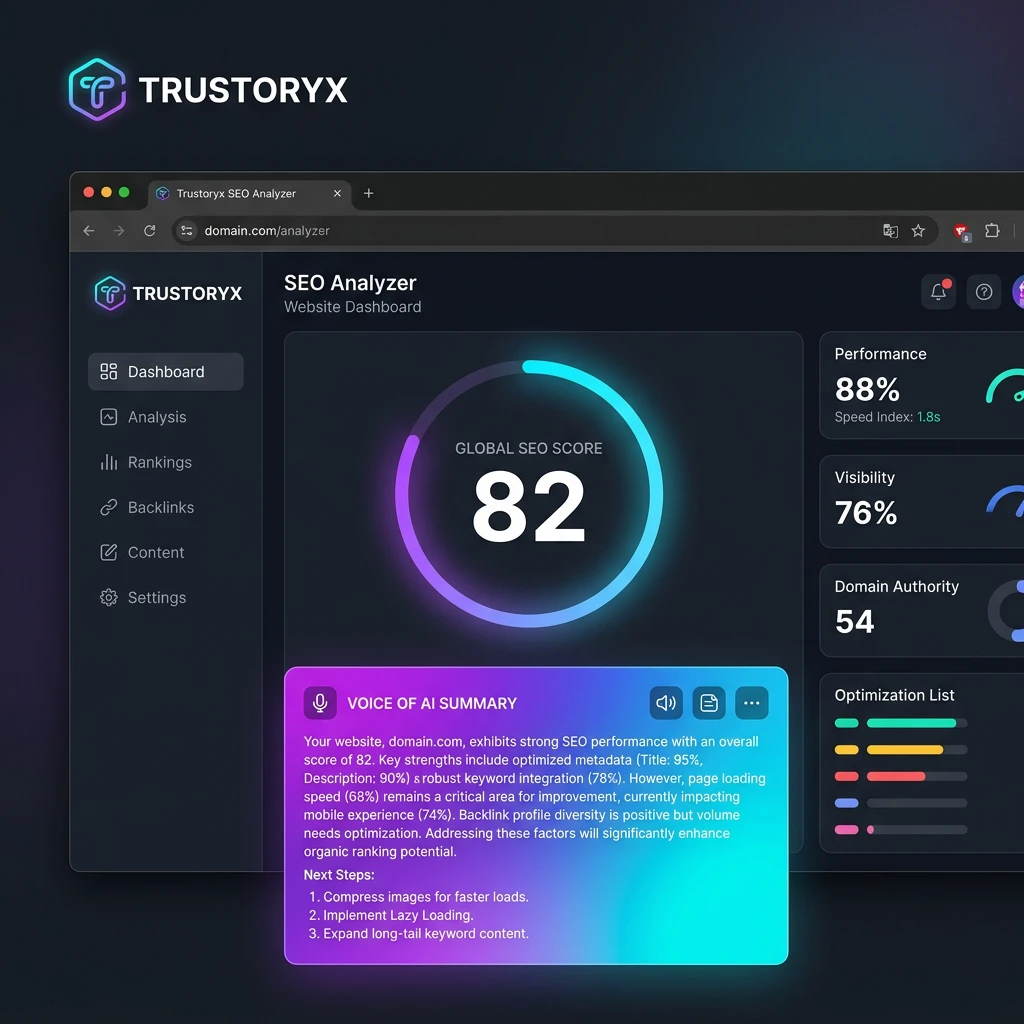
What a finding looks like
Each finding includes severity, observed evidence, and a suggested fix. The data below is labeled sample data.
Title tag is 72 characters
<title> — 72 chars exceeds the ~60 character display window in most results.
Shorten the title to ~50–60 characters so it is not truncated in search results.
Meta description missing
No <meta name="description"> element found in the document head.
Add a concise, descriptive meta description summarizing the page content.
H1 present and unique
Exactly one <h1> found, used as the primary page heading.
No action needed.
Evidence and limitations
- Analysis is limited to the current page loaded in the browser.
- SiteScore cannot observe server-side redirects or headers that are not reflected in the DOM.
- Ranking impact depends on many factors outside of on-page SEO; no score guarantees placement.
How to act on findings
Treat each finding as a starting point. Use the evidence panel to locate the relevant markup, apply the suggested fix, then re-run the analysis to confirm the issue is resolved.
Severity is a guide, not a rule. A warning that affects your primary content may matter more than a critical issue on a low-traffic page.
Combine SiteScore with official tools — Search Console, the Rich Results Test, and PageSpeed Insights — for a complete picture.
Explore related features
Technical SEO
Browser-observable technical signals: HTTPS, responsiveness, robots, and more.
ReadStructured Data
Detect and inspect schema.org JSON-LD and microdata on the page.
ReadAnswer Engine Optimization (AEO)
Signals that help answer-oriented content serve AI and voice queries.
ReadGEO & AI-Search Readiness
Heuristics for content clarity, entities, and discoverability in AI search.
ReadSEO Analysis questions
Run seo analysis on your page
Install the SiteScore Chrome extension and analyze the page you have open right now.